
Frozen Shoulder Treatment Durango | Shockwave & Chiropractic Care
Additionally, discover how shockwave therapy, dry needling, and chiropractic care can restore mobility and relieve frozen shoulder.
Real Patient Case: Quick Recovery from Secondary Adhesive Capsulitis
A local Durango patient recently visited Animas Chiropractic and Collective after a minor skiing fall. At first, she experienced no severe pain or visible injuries. However, within a week, simple daily tasks like getting dressed or reaching overhead became restricted. While she had a history of shoulder tendinitis, there was no indication of a rotator cuff tear. Her shoulder was slowly locking up.
The Integrated Treatment Plan
To address her condition, Dr. Lauren implemented an integrated, multi-modal care plan:
- Extracorporeal Shockwave Therapy (ESWT): Target area: shoulder joint capsule and surrounding connective tissue. Goal: Stimulate blood flow, reduce pain sensitivity, and promote cellular repair.
- Spinal Mobilization & Chiropractic Adjustments: Target area: cervical (neck) and thoracic (upper back) spine. Goal: Restore kinetic chain alignment and support proper shoulder biomechanics.
- Trigger Point Dry Needling: Target area: suboccipital muscles and upper trapezius. Goal: Release chronic muscle tension and eliminate overactive neural guarding.
The Result
After her initial treatment session, the patient experienced immediate improvements in shoulder mobility. That same week, she returned to cross-country skiing using her poles without severe pain—a milestone she previously thought impossible.
What Is Frozen Shoulder (Adhesive Capsulitis)?
Frozen shoulder, clinically known as adhesive capsulitis, is a painful condition characterized by progressive stiffness, inflammation, and loss of motion in the glenohumeral (shoulder) joint.
The shoulder is a ball-and-socket joint encased in a protective connective tissue sleeve called the joint capsule. When adhesive capsulitis occurs:
- The joint capsule becomes inflamed and thickened.
- Scar tissue (adhesions) develops, tightening the capsule like shrink-wrap around the joint.
- Both active movement (actions you perform yourself) and passive movement (actions performed by a clinician) become severely restricted.
Causes, Risk Factors, and Clinical Stages
Primary vs. Secondary Frozen Shoulder
- Primary Adhesive Capsulitis: Occurs spontaneously without an identifiable clear trigger.
- Secondary Adhesive Capsulitis: Develops following an injury, surgical procedure, or prolonged joint immobilization (e.g., wearing an arm sling).
Common Risk Factors
- Age & Gender: Adults aged 40–65, with a higher prevalence in women.
- Systemic Conditions: Diabetes mellitus, thyroid dysfunctions (hypothyroidism or hyperthyroidism), or cardiovascular disease.
- Previous Trauma: Prior history of shoulder tendinopathy, rotator cuff injuries, or previous frozen shoulder.
The 3 Stages of Adhesive Capsulitis
- Stage 1: Freezing Stage (2 to 9 Months) – Sharp, increasing pain with gradual loss of overall joint mobility.
- Stage 2: Frozen Stage (4 to 12 Months) – Pain may decrease slightly, but severe stiffness becomes the dominant issue, limiting movement.
- Stage 3: Thawing Stage (6 to 24 Months) – Joint inflammation subsides, and joint range of motion slowly and steadily improves.
Why Conventional Stretching Isn’t Enough
Static muscle stretching alone fails to resolve true frozen shoulder because the restriction lies deep within the capsular connective tissue, not just the superficial muscles.
Effective non-surgical treatment requires a combined approach targeting:
- The Joint Capsule: Restoring fluid dynamics and breaking down tight capsular adhesions.
- Hypertonic Muscles: Reducing spasms in surrounding muscles like the subscapularis, supraspinatus, and pectoralis major.
- Scapulothoracic Mechanics: Ensuring the shoulder blade glides smoothly over the ribcage.
- Central Nervous System: Calming neural pain pathways and muscle guarding responses.
Advanced Frozen Shoulder Therapies in Durango
1. Acoustic Shockwave Therapy (ESWT)
Acoustic shockwave therapy delivers high-energy sound waves directly to injured capsular tissue. This non-invasive treatment:
- Enhances microcirculation and neovascularization (new blood vessel growth).
- Disrupts chronic pain signals by hyper-stimulating local nociceptors.
- Breaks down fibrous adhesions and calcifications within the tissue.
2. Chiropractic Adjustments & Spinal Care
The shoulder complex relies heavily on stability from the upper back and neck. Chiropractic adjustments to the cervical and thoracic spine correct postural misalignments, reduce nerve interference, and improve kinetic chain support.
3. Dry Needling & Targeted Rehab
- Dry Needling: Inactivates painful myofascial trigger points in overactive stabilizer muscles (e.g., upper traps and suboccipitals).
- Targeted Exercise Rehab: Controlled, stage-appropriate joint mobilization prevents long-term motion loss without aggravating the capsule.
Frequently Asked Questions (FAQ)
Is frozen shoulder permanent?
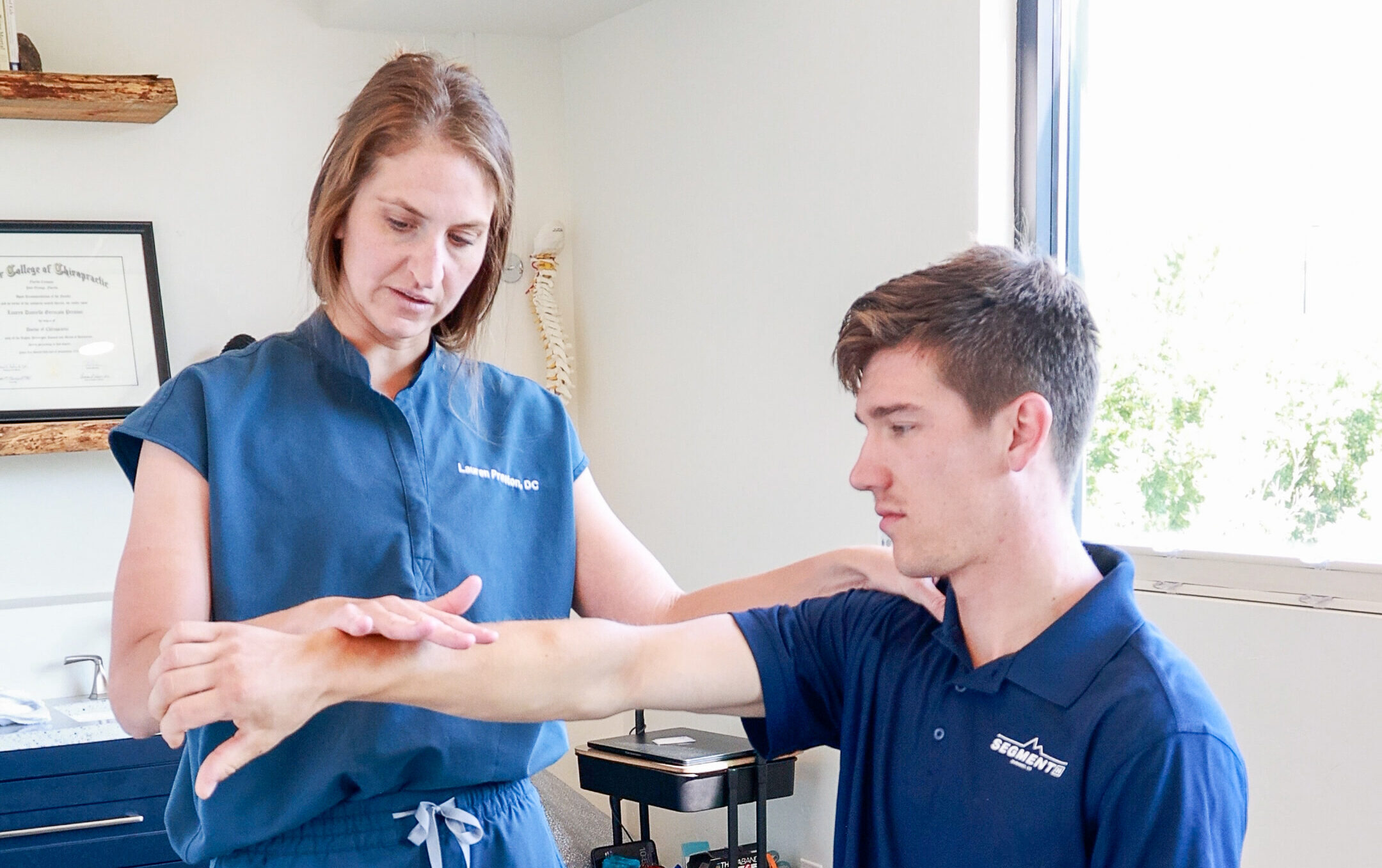
Here we can see Dr. Lauren Preston Examine a patient for potential frozen shoulder and shoulder instability
No. Adhesive capsulitis is a self-limiting condition that typically resolves, though full recovery can take 12 to 24 months without active clinical intervention.
Does shockwave therapy help frozen shoulder?
Yes. Clinical evidence shows that acoustic shockwave therapy significantly reduces shoulder pain, disrupts capsular adhesions, and accelerates mobility gains when combined with chiropractic and movement therapy.
Should I stretch my shoulder if it feels frozen?
Stretching must be tailored to your current stage. Aggressive stretching during the “freezing” phase can increase capsular inflammation. Gentle, guided mobility exercises are recommended under clinical supervision.
How can chiropractic care help adhesive capsulitis?
Chiropractic care addresses the entire movement system—including the thoracic spine, neck, and shoulder blade—to take excess stress off the shoulder joint and improve overall recovery speed.
Key Internal Resources
About the Author
Dr. Lauren provides evidence-based sports chiropractic care at Animas Chiropractic and Collective in Durango, Colorado. Specializing in non-invasive rehabilitation, shockwave therapy, and soft tissue modalities, she helps active individuals recover efficiently from complex joint and sports injuries.
