
A Complete Guide to TMJD Treatment: Neurogenic Dry Needling and Chiropractic Care
Dry Needling for TMJ Pain in Durango | Animas Chiropractic
If you’re ready to relieve jaw pain and tension book
an appointment here: https://www.animaschiropractic.com/book-appointment
Understanding TMJ Dysfunction
At Animas Chiropractic and Collective, we frequently help patients experiencing TMJ pain, headaches, and jaw tension through a combination of:
- Chiropractic adjustments
- Targeted rehabilitation exercises
- Manual therapy
- Neurogenic dry needling
When chiropractic care is combined with dry needling, it can be a highly effective way to reduce pain, restore jaw mobility, and address the underlying cause of TMJ symptoms rather than simply masking discomfort. Experiencing jaw pain, clicking, headaches, and difficulty chewing are common symptoms of temporomandibular joint dysfunction (TMJD). Many people assume that TMJ problems are strictly dental issues, but in reality, TMJ dysfunction is frequently related to muscle tension, movement dysfunction, and nervous system irritation rather than structural damage to the jaw itself.
The temporomandibular joint (TMJ) is one of the most complex joints in the body. It connects the lower jaw (mandible) to the skull and allows you to speak, chew, yawn, and swallow. Because it must coordinate with multiple muscles, nerves, and joints including the neck and upper spine even small imbalances can create significant pain and dysfunction.
If these are symptoms you are experiencing consider booking an appointment with Dr Lauren Preston today.
Common Symptoms of TMJ Dysfunction
TMJ dysfunction can present in many different ways, and symptoms often extend beyond the jaw itself.
Common TMJ symptoms include:
- Jaw pain or soreness
- Clicking, popping, or grinding sounds when opening the mouth
- Difficulty chewing or biting
- Limited mouth opening
- Jaw locking
- Facial pain
- Headaches or migraines
- Ear pain or pressure
- Tooth sensitivity without a dental cause
- Neck and upper shoulder tension
Because the jaw, neck, and nervous system are so closely connected, TMJ dysfunction can often feel like a headache problem, sinus issue, or even a dental issue when the root cause is muscular or neurological.
The Muscles Involved in Jaw Movement
Several muscles control the movement and stability of the jaw. When these muscles become overactive, tight, or develop trigger points, they can significantly affect the function of the temporomandibular joint. Key muscles involved in jaw function include:
Masseter
One of the strongest muscles in the body relative to its size. It helps close the jaw and generate force for chewing. Tightness here often causes jaw soreness and tooth pain.
Temporalis
A fan-shaped muscle on the side of the head that assists with closing the jaw. Trigger points in this muscle commonly produce temple headaches and pain behind the eyes.
Lateral Pterygoid
This deep muscle controls forward movement of the jaw and plays a major role in jaw opening and stabilization. Dysfunction here is commonly associated with jaw clicking and disc displacement.
Medial Pterygoid
Works together with the masseter to close the jaw and assist with chewing movements. Tightness can produce pain deep inside the jaw or throat area.
Digastric Muscle
Helps open the mouth and stabilize the jaw during movement. Dysfunction may contribute to jaw fatigue and swallowing discomfort.
Cervical Musculature (Neck Muscles)
The muscles of the neck—such as the sternocleidomastoid and suboccipitals—play a crucial role in head posture and jaw alignment. Poor posture, especially forward head posture, can significantly increase stress on the TMJ.
When these muscles develop trigger points or excessive tension, they can create symptoms such as:
- Referred pain into the jaw, teeth, or ear
- Limited mouth opening
- Clicking or locking sensations
- Facial tension
- Headaches or migraines
This muscular component is one of the main reasons dry needling can be so effective for TMJ dysfunction.
Why the Trigeminal Nerve Matters
A key component of TMJ pain involves the trigeminal nerve, which is the primary sensory nerve of the face.
The trigeminal nerve is responsible for:
- Sensation of the forehead
- Sensation around the eye
- Feeling in the cheek and sinuses
- Sensation of the upper and lower teeth
- Motor control to the muscles used for chewing
Because this nerve has such a broad sensory distribution, irritation anywhere along its pathway can create a variety of symptoms.
When the trigeminal nerve or its branches become irritated, the brain interprets those signals as pain. This can produce symptoms that feel unrelated to the jaw but are actually part of the same neurological pattern.
Common symptoms related to trigeminal nerve irritation include:
- Guarding in the jaw muscles
- Tooth pain without a dental cause
- Sinus or facial pressure
- Pain behind the eyes
- Headaches or migraines
- Jaw fatigue
- Neck pain
- Facial pain or tingling
This neurological connection is why TMJ dysfunction often requires a treatment approach that addresses both muscular tension and nervous system sensitivity.
How Dry Needling Helps TMJ Pain
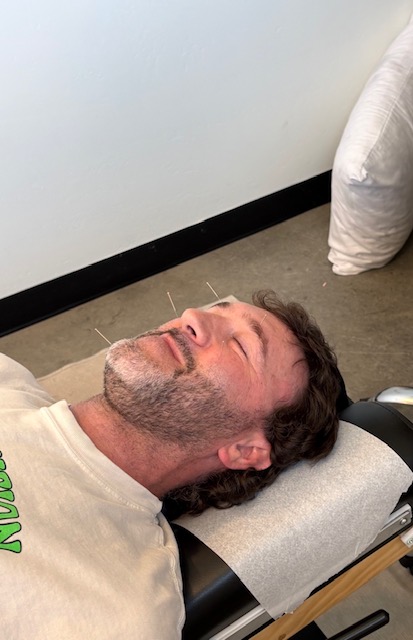
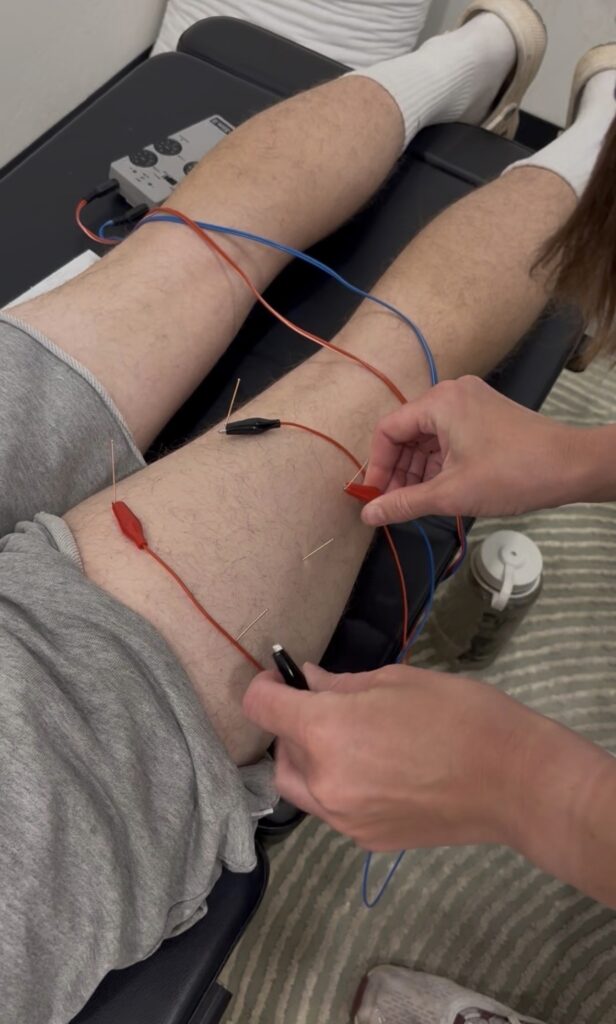
Dry needling is a technique that uses very thin sterile needles to target trigger points within muscles and neurological pathways that contribute to pain and dysfunction.
In the context of TMJ treatment, dry needling can be applied to:
- Jaw muscles (masseter, temporalis, pterygoids)
- Facial muscles
- Neck muscles
- Areas along the trigeminal nerve distribution
By inserting a needle directly into a trigger point, dry needling can help:
- Reduce muscle tightness
- Decrease muscle guarding
- Improve circulation to the tissue
- Reduce inflammatory chemicals
- Restore normal muscle function
- Calm overactive pain signaling
Patients often experience a local twitch response, which is a brief contraction of the muscle indicating the trigger point has been released.
After treatment, many patients notice:
- Reduced jaw tension
- Less clicking or popping
- Improved mouth opening
- Decreased headaches
- Reduced facial pain
Because dry needling addresses both muscular and neurological contributors to TMJ dysfunction, it can be a powerful addition to a comprehensive treatment plan.
What Is Neurogenic Dry Needling?
Neurogenic dry needling focuses specifically on targeting the nervous system’s role in pain and muscle dysfunction.
Instead of treating only tight muscles, this approach also considers:
- Nerve pathways
- Pain signaling patterns
- Reflexive muscle guarding
- Brain–muscle communication
By influencing these neurological pathways, neurogenic dry needling can help reset dysfunctional muscle activation patterns and reduce chronic pain cycles.
This approach is particularly useful for TMJ conditions where symptoms include:
- Chronic headaches
- Facial pain
- Tooth sensitivity without dental pathology
- Persistent jaw tightness
- Neurological pain patterns
What Does the Research Say?
Research continues to support dry needling as an effective treatment option for myofascial temporomandibular disorders.
A systematic review by La Touche et al. found that dry needling can help reduce pain and improve jaw function in patients with myofascial temporomandibular disorders, particularly when combined with conservative treatments such as physical therapy.
These findings support the role of dry needling as part of a comprehensive treatment strategy that addresses both the muscular and neurological components of TMJ dysfunction.
In other words, treatments that combine manual therapy, rehabilitation exercises, and dry needling tend to produce better outcomes than isolated interventions.
What to Expect During a TMJ Dry Needling Session
During a dry needling appointment at Animas Chiropractic, treatment begins with a thorough evaluation of:
- Jaw mobility
- Muscle tenderness
- Trigger points
- Neck and posture mechanics
- Nervous system involvement
Treatment may include:
- Dry needling of key jaw and neck muscles
- Gentle manual therapy to restore movement
- Chiropractic adjustments when appropriate
- Corrective exercises to improve jaw mechanics
The needles themselves are extremely thin and typically cause minimal discomfort. Some patients experience mild soreness for 24–48 hours as the muscle resets.
Why a Whole-Body Approach Matters
One of the biggest misconceptions about TMJ dysfunction is that it is only a jaw problem.
In reality, TMJ symptoms are often influenced by:
- Neck posture
- Upper cervical spine mobility
- Shoulder tension
- Breathing patterns
- Stress and muscle guarding
By addressing these broader factors, treatment can help reduce recurring flare-ups and improve long-term outcomes.
At Animas Chiropractic, TMJ care often includes:
- Dry needling
- Chiropractic adjustments
- Soft tissue therapy
- Postural correction
- Jaw stabilization exercises
This comprehensive approach helps restore normal function rather than simply treating symptoms.
When Should You Seek Treatment?
If you are experiencing persistent jaw pain, headaches, or clicking that interferes with daily activities, it may be time for an evaluation.
Early treatment can prevent TMJ dysfunction from becoming chronic and reduce the likelihood of long-term joint irritation.
Many patients seek care when they notice:
- Increasing jaw tightness
- Frequent headaches
- Jaw clicking or locking
- Facial pain or tooth sensitivity
- Difficulty chewing
Addressing these symptoms early can help restore normal movement and prevent worsening dysfunction.
Ready to get relief from TMJ pain?
Book an Appointment:
https://www.animaschiropractic.com/book-appointment
Author
Dr. Lauren Preston, DC
Owner, Animas Chiropractic – Durango, Colorado
Dr. Lauren Preston specializes in treating musculoskeletal pain, sports injuries, and chronic pain conditions using evidence-based chiropractic care. At Animas Chiropractic and Collective, she integrates rehabilitation, manual therapy, shockwave therapy, and dry needling to help patients restore function and return to the activities they love.
Her approach focuses on identifying the root cause of pain rather than simply treating symptoms, allowing patients to achieve longer-lasting relief.
