
Some injuries seem to follow a frustrating pattern.
They hurt.
You rest.
They feel better.
You return to activity.
And the pain comes right back.
If this sounds familiar, you may not be dealing with an injury that simply needs more time off. You may be dealing with chronic tendon pain, often referred to as tendinopathy.
Tendons behave differently from muscles. They adapt more slowly, respond strongly to load, and can become surprisingly stubborn when they have been overloaded for weeks or months.
At Animas Chiropractic and Collective in Durango, we see this pattern often in the Achilles tendon, elbow, patellar tendon, gluteal tendons, shoulder, and other areas.
The good news is that persistent tendon pain does not automatically mean the tissue is permanently damaged.
It usually means we need to understand why the tendon is not tolerating the demands being placed on it—and rebuild that capacity gradually.
Why Do Tendon Injuries Become Chronic?
A tendon connects muscle to bone and helps transfer force through the body.
Every time you run, jump, lift, climb stairs, grip, throw, or push off the ground, your tendons are helping manage load.
Problems often begin when load exceeds capacity.
That can happen because of:
- A sudden increase in training
- Repetitive work
- Returning to sport too quickly
- Reduced recovery
- Changes in technique
- Changes in footwear or equipment
- Weakness
- Previous injury
- A period of inactivity followed by rapid return
At first, the tendon may simply become irritated.
If the same stress continues without enough adaptation, the tendon can develop more persistent changes in pain sensitivity, structure, and load tolerance.
That is where a short-term injury can turn into a chronic problem.
Tendinitis vs. Tendinopathy
People often use the word tendinitis for any painful tendon.
The “-itis” ending suggests inflammation.
Inflammatory processes can certainly be involved early in an injury, but chronic tendon pain is often more complicated.
Tendinopathy is a broader term used to describe persistent tendon pain and dysfunction.
In chronic cases, the tendon may show changes in:
- Collagen organization
- Tissue structure
- Load tolerance
- Pain sensitivity
- Cellular activity
This is why treating every tendon problem as “inflammation” can be overly simplistic.
Why Rest Alone Often Isn’t Enough
Rest reduces load.
That is why pain often improves when you stop using the tendon.
But there is a catch:
Tendons need appropriate load to become stronger.
If you rest for several weeks, symptoms may settle because the tendon is not being challenged.
But the tendon may also lose even more capacity.
Then you return to the exact same activity level as before.
The result?
Pain returns.
This creates a common cycle:
Pain → Rest → Improvement → Return to Activity → Pain Again
The solution is usually not endless rest.
It is progressive loading.
What Is Progressive Loading?
Progressive loading means gradually exposing the tendon to increasing levels of force.
The goal is to help the tissue adapt without repeatedly overwhelming it.
Depending on the tendon, this might include:
- Isometric exercises
- Slow resistance training
- Eccentric exercises
- Calf raises
- Squats
- Step-ups
- Grip strengthening
- Shoulder loading
- Single-leg exercises
- Sport-specific drills
The exact program depends on the condition and the athlete or patient.
A runner with Achilles pain needs a different progression than someone with tennis elbow.
Why Do Tendons Heal More Slowly Than Muscles?
Tendons are designed to handle force efficiently, but they generally have a lower blood supply than muscle tissue.
That does not mean tendons cannot heal.
It means adaptation tends to happen more slowly.
Tendons also change in response to repeated loading over time.
So if a tendon problem has been developing for six months, it is unrealistic to expect it to fully recover after two days of rest.
Biology takes time.
Does Pain Mean the Tendon Is Still Damaged?
Not always.
Pain and tissue damage are related—but they are not identical.
In chronic conditions, the nervous system can become more sensitive.
A tendon may hurt even when there is not ongoing acute damage occurring with every movement.
This matters because complete avoidance of movement can sometimes reinforce fear and reduce capacity.
A good rehabilitation plan helps the patient gradually reintroduce movement and load in a way that is tolerable.
Why Tendon Pain Sometimes Feels Better During Activity
Many people with tendinopathy notice something strange:
The first few minutes hurt.
Then the tendon “warms up.”
Activity feels better.
Later that day—or the next morning—the pain returns.
This pattern is common.
A temporary reduction in pain during activity does not necessarily mean the tendon is fully tolerating the workload.
That is why we pay attention not only to pain during exercise, but also to:
- Symptoms later that day
- Morning stiffness
- Next-day soreness
- Changes in function
The tendon’s response over 24 hours can be more useful than how it feels during the workout itself.
What Factors Can Slow Tendon Recovery?
Several factors may influence how well a tendon adapts.
These can include:
- Poor sleep
- Inadequate nutrition
- Smoking
- Certain metabolic conditions
- Age
- Hormonal factors
- Repeated overload
- Inconsistent rehabilitation
- Long periods of inactivity
- Returning to sport too quickly
- Certain medications
That does not mean one of these factors is automatically “the cause.”
But tendon recovery is influenced by the overall environment in which healing is taking place.
Why Stretching Isn’t Always the Answer
Stretching often feels like the obvious solution for a painful tendon.
Sometimes mobility work is useful.
But aggressive stretching can also increase compression or irritation in certain tendinopathies.
For example:
- Stretching the outer hip aggressively can compress gluteal tendons
- Deep ankle dorsiflexion can aggravate insertional Achilles pain
- Repetitive wrist stretching can irritate elbow tendons in some patients
Tendon treatment is usually more about load management and strength than simply making the tissue “looser.”
Can Shockwave Therapy Help Chronic Tendon Pain?
Shockwave therapy can be a useful option for some chronic tendon problems.
Shockwave—also called extracorporeal shockwave therapy or ESWT—uses acoustic pressure waves to mechanically stimulate targeted tissue.
At Animas Chiropractic and Collective, we use the Piezowave 2 system.
Shockwave may influence processes related to:
- Pain modulation
- Tissue remodeling
- Circulation
- Cellular response
- Tendon adaptation
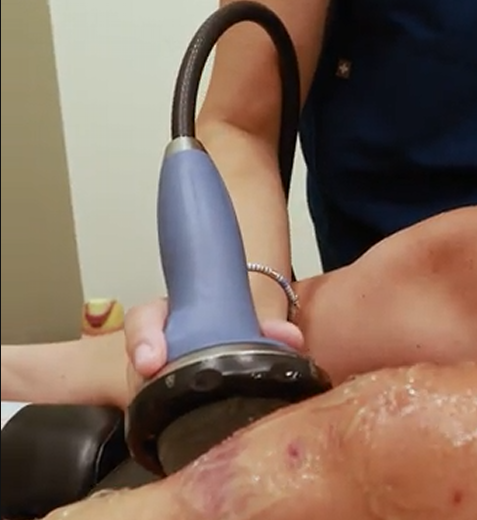
It is commonly used for chronic conditions such as:
- Achilles tendinopathy
- Tennis elbow
- Golfer’s elbow
- Patellar tendinopathy
- Gluteal tendinopathy
- Certain shoulder tendon conditions
- Plantar fascia-related pain
Shockwave is generally most useful when it is part of a larger plan.
Shockwave does not replace strength training.
It complements it.
Interested in shockwave for chronic tendon pain? [Learn more about Orthopedic Shockwave Therapy → INTERNAL LINK]
Can Dry Needling Help Tendon Problems?
Dry needling may also be useful when surrounding muscular or neurogenic factors are contributing to the problem.
At our office, we use a neurogenic approach to dry needling.
This means we consider more than the painful tendon.
Depending on the condition, treatment may involve:
- Surrounding muscles
- Relevant peripheral nerves
- The spine
- Other tissues contributing to altered movement
Dry needling may be particularly useful when muscle guarding, pain sensitivity, or neuromuscular dysfunction is limiting rehabilitation.
But again, it is a tool.
The tendon still needs progressive loading.
Home – Animas Chiropractic – Durango, Colorado
Where Do Chiropractic Adjustments Fit In?
Tendons do not function in isolation.
A painful Achilles tendon is influenced by the ankle, foot, knee, hip, and gait.
Elbow tendons are influenced by the wrist, shoulder, and cervical spine.
Gluteal tendons are influenced by the hip, pelvis, and lumbar spine.
When clinically relevant, chiropractic adjustments may be used to improve joint mobility and help someone move more effectively during rehabilitation.
That does not mean chronic tendon pain is caused by a joint being “out.”
Adjustments are one part of a broader musculoskeletal treatment plan.
Why Imaging Doesn’t Always Tell the Whole Story
Ultrasound and MRI can show tendon changes.
But imaging findings do not always match symptoms perfectly.
Some people have structural tendon changes without pain.
Others have significant pain with relatively modest imaging findings.
This is why treatment should not be based on an image alone.
We combine imaging—when it is needed—with:
- Symptoms
- Examination findings
- Strength
- Function
- Activity tolerance
- Response to load
The goal is to treat the person, not just the scan.
When Does a Tendon Need Imaging?
Imaging may be appropriate when:
- There was significant trauma
- A tendon rupture is suspected
- There is major weakness
- Symptoms are not improving
- The diagnosis is unclear
- Surgery is being considered
- There is concern for another condition
Not every chronic tendon problem needs an MRI.
What About Cortisone?
Corticosteroid injections can reduce pain and inflammation in certain situations.
But chronic tendon conditions require careful consideration.
Temporary pain relief does not necessarily mean tendon capacity has improved.
Repeated steroid exposure around some tendons may also raise concerns about tissue integrity.
This is one reason chronic tendinopathy treatment often focuses more on progressive loading and other conservative strategies.
What About PRP?
Platelet-rich plasma, or PRP, is another treatment sometimes used for chronic tendon problems.
It involves processing a patient’s own blood and injecting concentrated platelets into the target area.
Evidence varies depending on the specific tendon and protocol.
PRP and shockwave are sometimes discussed in similar situations, but they work differently.
Shockwave is non-invasive.
PRP requires an injection.
Neither is automatically the best choice for everyone.
How Long Does Chronic Tendinopathy Take to Improve?
This is probably the question everyone wants answered.
The honest answer is:
It depends.
Factors include:
- How long symptoms have been present
- Which tendon is involved
- Severity
- Activity demands
- Strength
- Consistency with rehab
- Sleep and recovery
- How well load is managed
Some people improve significantly over several weeks.
Others require several months.
Chronic tendon pain is rarely a quick fix.
But slow does not mean hopeless.
What Does a Good Tendon Treatment Plan Look Like?
A thoughtful tendon plan usually includes:
Step 1: Identify the tendon and aggravating factors
We need to know what is being overloaded.
Step 2: Modify the load
Enough to calm symptoms—but not so much that capacity disappears.
Step 3: Begin progressive strengthening
The tendon needs a reason to adapt.
Step 4: Add supportive treatments when appropriate
This may include shockwave, dry needling, or adjustments.
Step 5: Progress toward real-life demands
Running, hiking, lifting, skiing, climbing, work, or whatever matters to the patient.
Step 6: Reassess
If the tendon is not responding, the plan may need to change.
When Should Persistent Tendon Pain Be Evaluated?
Consider getting evaluated when:
- Pain has lasted several weeks
- Symptoms repeatedly return
- You are modifying your activities around the pain
- Strength is declining
- Morning stiffness is persistent
- Pain is affecting sleep
- You are unable to progress your training
- You are not sure what structure is injured
You do not need to wait six months before asking for help.
Chronic Tendon Pain Treatment in Durango
Durango is a community that likes to move.
Running.
Skiing.
Cycling.
Climbing.
Hiking.
Pickleball.
Strength training.
Physical work.
That also means we see a lot of tendons that have been asked to do more than they were ready for.
At Animas Chiropractic and Collective, our approach is not simply:
“Stop doing everything until it feels better.”
We want to understand:
What load is irritating the tendon?
How much capacity does the tendon currently have?
What does it need to do for your life or sport?
From there, treatment may include:
Progressive rehabilitation to rebuild strength and load tolerance.
Shockwave therapy for selected chronic tendon problems.
Neurogenic dry needling when neuromuscular or neurogenic factors are relevant.
Chiropractic adjustments when joint restrictions are contributing to movement limitations.
The goal is not temporary pain relief.
The goal is to help the tendon become capable again.
Frequently Asked Questions About Chronic Tendon Problems
Why won’t my tendon injury heal?
Chronic tendon pain often persists because the tendon has not regained enough capacity to tolerate the demands being placed on it. Repeated overload, inadequate recovery, and inconsistent rehabilitation can all contribute.
Is chronic tendon pain the same as tendinitis?
Not exactly. Tendinitis implies inflammation, while chronic tendinopathy describes a broader pattern of persistent tendon pain and dysfunction.
Should I rest a painful tendon?
Temporary activity modification can help, but complete rest is rarely the long-term solution for chronic tendinopathy. Tendons need appropriately dosed load to rebuild capacity.
How long does tendinopathy take to heal?
Recovery varies widely. Chronic tendon problems often take several weeks or months to improve because tendon adaptation happens gradually.
Can shockwave therapy help tendinopathy?
Shockwave therapy may help selected chronic tendon conditions and is commonly used alongside progressive strengthening and rehabilitation.
Can dry needling help chronic tendon pain?
Dry needling may help when surrounding muscular, neurological, or pain-related factors are contributing. It should usually be combined with progressive loading rather than used alone.
Can chiropractic adjustments help tendon injuries?
Adjustments may be useful when joint restrictions are affecting movement or load distribution. They do not replace the need for tendon strengthening.
Is stretching good for tendinopathy?
Sometimes, but not always. Certain stretches may increase compression or irritation around a painful tendon. Treatment should be individualized.
Can tendons heal after months of pain?
Yes. Chronic symptoms do not automatically mean the tendon is permanently damaged. Tendons can adapt over time when load and rehabilitation are managed appropriately.
Does pain mean I am damaging the tendon?
Not always. Pain can reflect tissue sensitivity as well as structural changes. Controlled loading is often part of recovery even when some discomfort is present.
When should I get imaging for tendon pain?
Imaging may be appropriate after trauma, when rupture is suspected, when weakness is significant, when the diagnosis is unclear, or when symptoms are not improving as expected.
Where can I get treatment for chronic tendon pain in Durango?
Animas Chiropractic and Collective offers conservative care for chronic tendon conditions in Durango, Colorado, including rehabilitation, shockwave therapy, neurogenic dry needling, and chiropractic care when appropriate.
