Shockwave Therapy: At Animas Chiropractic & Collective located in Durango, CO
Shockwave Therapy 101: What Patients Should Know Before Starting Treatment
If you’ve been dealing with pain that just won’t go away, something that lingers despite rest, stretching, or even other treatments – it may be time to start shockwave therapy here in Durango CO.
And naturally, the next questions are:
- “Does this actually work?”
- “Is it right for my injury?”
At Animas Chiropractic and Collective, shockwave therapy is one of the tools we use to help patients move past stubborn pain and get back to doing what they enjoy. But like any treatment, it works best when it’s used with the right injury as part of a thoughtful plan.
What Is Shockwave Therapy?
Shockwave therapy uses acoustic sound waves to stimulate healing in injured or irritated tissue.
In simple terms, it helps “wake up” an area that hasn’t healed properly. It works by:
- Increasing blood flow
- Stimulating cellular repair
- Reducing pain sensitivity
- Helping tissue tolerate movement again
For many patients, it creates a shift—especially when things have felt stuck for weeks or months.
What Conditions Respond Best to Shockwave Therapy?
This is the most important question—and honestly, where the shockwave shines. Shockwave therapy tends to work best for chronic, stubborn conditions, especially those involving tendons and soft tissue that haven’t healed fully.
Some of the most common conditions we treat in our Durango clinic include:
- Plantar fasciitis (heel pain)
- Tennis elbow / golfer’s elbow
- Achilles tendinopathy
- Patellar tendon pain (jumper’s knee)
- Rotator cuff-related shoulder pain
- Frozen shoulder (as part of a broader plan)
- Hip pain (including gluteal tendinopathy)
In general, shockwave is most helpful when pain has been present for several weeks or longer, the area feels “stuck” or slow to improve, and rest alone hasn’t solved the problem.
What Makes Shockwave Different From Other Treatments?
Most treatments focus on either reducing pain or improving movement. Shockwave helps with both—but in a different way. Instead of just calming symptoms, it stimulates a healing response in the tissue itself. That’s why it’s often used when other treatments haven’t fully worked.
But here’s the key: Shockwave doesn’t replace rehab—it makes rehab more effective. By reducing pain and improving tissue function, it allows you to move better and actually make progress with exercise and activity.
Not All Shockwave Is the Same (And Why That Matters)
You might not hear this at every clinic, but it’s important. There are different types of shockwave technology, and they deliver energy to the body in different ways.
At a higher level, we use systems like:
- SoftWave → broader, more global treatment
- PiezoWave → more targeted and precise
For you as a patient, what matters most is this: some approaches treat a larger area and overall tissue environment, while others focus on a specific, localized structure. Neither is universally “better”—the right choice depends on your condition, your symptoms, and how your body is responding.
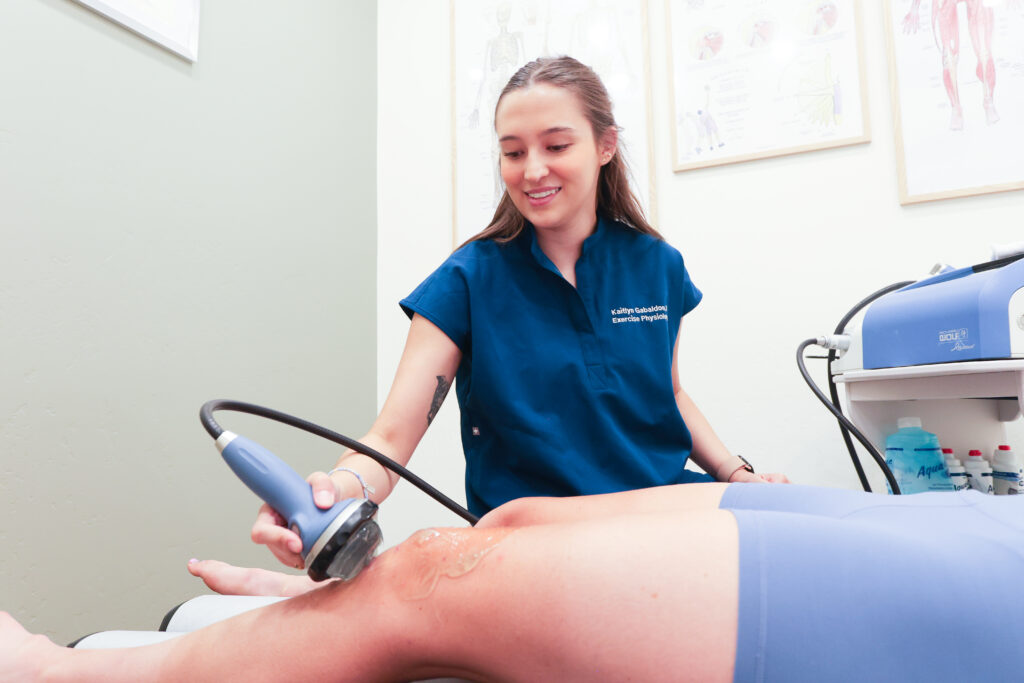
At our clinic, your care is a collaborative effort. Our shockwave therapy sessions are performed by Kaitlyn Gabaldon, our specialized Exercise Physiologist, under the direct treatment plan from herself Dr. Lauren Preston, our clinic’s Chiropractor. Kaitlyn brings a high level of expertise to your treatment, holding an honors degree in Exercise Science with a dedicated focus on injury prevention. Drawing from her background as a former D2 collegiate athlete, she understands the physical demands placed on the body and is passionate about helping patients recover, regain function, and return to their active lifestyles through targeted, evidence-based care.
What to Expect During Treatment
Shockwave sessions are relatively quick— you’ll be with us for about 30 minutes . You may feel a tapping or pulsing sensation, or some areas that are more sensitive than others. Most patients tolerate it well, and intensity can always be adjusted.
After treatment, it’s common to feel mild soreness (like after a workout) and experience gradual improvement over the following days.
The Most Important Part: What Happens Between Visits
This is where the biggest difference in outcomes happens. Shockwave therapy helps create a window where pain is lower, movement is easier, and tissue can handle more load. But if that window isn’t used well, progress can stall.
That’s why at our clinic, treatment always includes a clear understanding of your condition, specific exercises matched to your injury, and guidance on activity and progression. Because long-term improvement doesn’t come from treatment alone—it comes from how your body adapts between visits.
Why This Approach Works Well in Durango
In Durango, most people aren’t looking to just “rest until it feels better.” They want to get back on the trails, ski without pain, ride, run, lift, and stay active. Shockwave therapy can help speed that process—but it works best when paired with the right plan.
A Simple Way to Know If Shockwave Might Help You
Shockwave therapy may be a good fit if:
- Your pain has been lingering longer than expected
- You’ve tried rest, stretching, or other care without full resolution
- You feel limited in activity but not completely injured
- You’re ready to actively participate in rehab—not just passive treatment
FAQ: Shockwave Therapy
Does shockwave therapy hurt? It can feel intense in certain areas, but most patients tolerate it well and intensity can be adjusted.
How many sessions will I need? This varies, but many patients notice meaningful changes within a few treatments.
Can I stay active during treatment? In most cases, yes—with some modifications depending on your condition.
Is shockwave therapy enough on its own? It’s most effective when paired with proper rehab and a clear treatment plan. This is something where Dr. Lauren Preston is happy to help with.
Click to get started!
Author Bio
Dr. Lauren
Dr. Lauren provides evidence-based chiropractic care in Durango focused on helping active individuals recover efficiently and move better. She combines shockwave therapy, hands-on care, and personalized rehab to help patients get back to doing what they love.